What Is Somatic Breathwork? A Grounded Guide to Breathing With the Body
Aug 3
Most of us have been taught to work things out with our heads. When we feel anxious, overwhelmed, or stuck, we try to think our way to calm. But there’s a reason that so often doesn’t work: a great deal of what we carry isn’t stored in our thoughts at all.
It’s held in the body - in a tight chest, a clenched jaw, shallow breathing we don’t even notice.
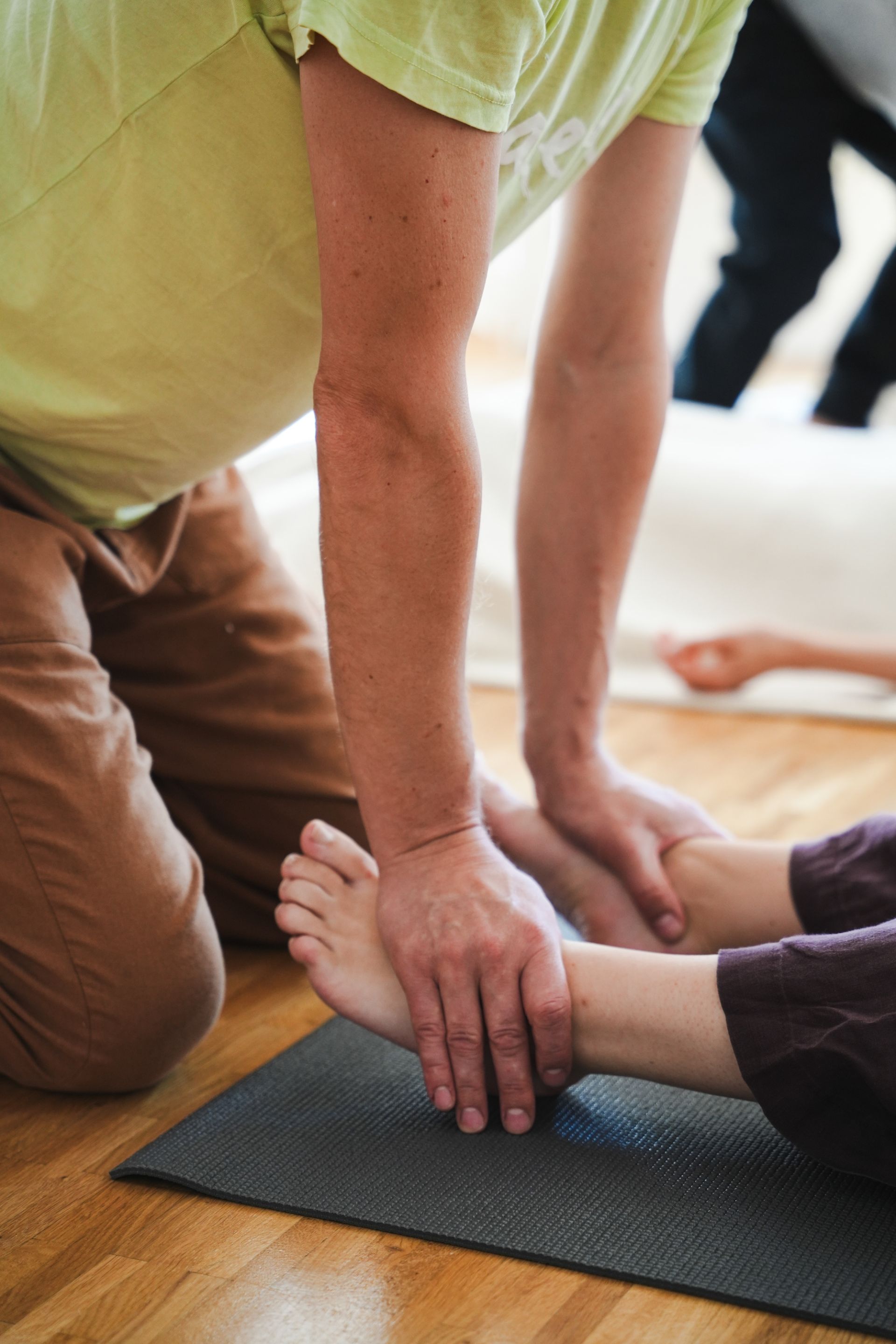
Somatic breathwork is a practice that works with the body directly, using conscious breathing to release that stored tension and gently guide your nervous system back to a sense of safety.
If you’ve explored the benefits of breathwork before, somatic breathwork is where breathing meets body awareness - and it’s one of the most accessible ways to begin building a real relationship with your own nervous system.

What does “somatic” actually mean?
The word somatic comes from the Greek soma, meaning “the living body.” Somatic practices are body-based approaches to wellbeing: instead of analysing an experience from the outside, they invite you to notice it from the inside - the sensations, the tension, the subtle shifts that happen as you pay attention.
Somatic breathwork brings that body-first lens to conscious breathing. Rather than treating the breath as a mechanical exercise (“in for four, out for four”), it uses the breath as a doorway into physical sensation. You breathe, you notice what arises in the body, and you allow it to move and release. The breath becomes both the tool and the guide.
How somatic breathwork works with your nervous system
Your autonomic nervous system has two main branches. The sympathetic branch is your accelerator. It fires up the “fight or flight” response when you sense a threat. The parasympathetic branch is your brake. It brings you into “rest and digest,” where your body can settle, repair, and feel safe.
Modern life keeps many of us stuck with a foot on the accelerator. Deadlines, notifications, and unprocessed stress leave the sympathetic system running long after any real danger has passed. Over time this shows up as tension, poor sleep, irritability, and that wired-but-tired feeling.
Here’s the remarkable part: the breath is the one part of the autonomic nervous system you can consciously steer. Slow, full, connected breathing sends a direct signal, largely through the vagus nerve, that tells your body the threat has passed and it’s safe to downshift into the parasympathetic state. Somatic breathwork uses that signal deliberately, pairing it with body awareness so you don’t just calm down mentally, you feel the release physically. It’s the same nervous-system principle behind using breathwork for stress relief, applied with a stronger focus on what’s happening in the body.
What makes it different from other breathwork?
There are many forms of breathwork, and somatic breathwork overlaps with several of them. What sets the somatic approach apart is where your attention goes.

In a technique-led practice, the focus is on the pattern, the count, the ratio, the rhythm. In somatic breathwork, the pattern matters less than your felt experience of it. The core questions are: What do I notice in my body right now? Where is there tension? What happens if I breathe into it? This emphasis on interoception, your ability to sense your own internal state, is what makes the practice “somatic” rather than simply “breathing exercises.”
It’s a spectrum, not a rigid category. A gentle somatic session might use slow, diaphragmatic breathing with lots of pauses to notice sensation. A deeper session might use continuous, connected breathing to build energy and surface emotion for release. Both are somatic when the body’s felt sense stays at the centre.

What somatic breathwork feels like
People are often surprised by how physical the experience is. You might feel tingling in your hands or face (this is normal and temporary), warmth, waves of emotion, the urge to move or stretch, or a deep, spreading sense of relaxation. Sometimes emotions rise unexpectedly: tears, a lump in the throat, or a sense of lightness afterwards. This is the body letting go of something it had been holding.
None of this means anything has gone wrong. In fact, it’s usually the point: sensation and emotion are the body’s way of releasing what talking alone can’t. This is closely related to the link between breathwork and emotional regulation. By giving stored feeling a safe channel to move through, you build a steadier baseline over time.
The benefits of a regular practice
With consistency, people who practise somatic breathwork commonly report:
- A calmer, more resilient nervous system. You recover from stress faster and stay regulated for longer.
- Release of chronic physical tension, especially in the chest, shoulders, and belly where we tend to hold stress.
- Greater emotional awareness and regulation, noticing feelings earlier and moving through them rather than suppressing them.
- Better sleep and more steady energy as the body spends more time in rest-and-digest.
- A deeper sense of connection to yourself, the quiet, grounded feeling of being in your body rather than stuck in your head.
Because it targets the nervous system directly, somatic breathwork can be a valuable companion to other tools for managing anxiety, rather than a replacement for them.
Where somatic breathwork can take you
For many people, learning to work with the breath and body this way becomes more than a stress tool. It becomes a doorway into a much deeper understanding of how the nervous system shapes everything we feel. If that resonates, you might find yourself wanting to go further: to understand the science, deepen your own practice, or even learn to hold this work for others.
That’s exactly what PRANABEAT’s trainings are built for. Whether you're a curious beginner wanting to try breathwork for yourself, or interested in becoming a confident, grounded practitioner, we have a training for you. Just check out our course catalog or get in touch. We're always happy to answer your questions.
Your breath is always with you, an it's one fo the most direct routes back to a sense of safety in your own body. Somatic breathwork is simply learning to use it on purpose.
With love, Kate.
Founder, PRANABEAT.
Founder, PRANABEAT.

A short note on safety
Somatic breathwork is gentle and safe for most people, but deeper or faster forms of breathing can be intense and are best explored with a trained facilitator.
If you’re pregnant, have a cardiovascular or respiratory condition, epilepsy, or a history of significant trauma or a mental-health condition, check with a healthcare professional first, and work with a qualified guide rather than practising intense techniques alone.
Gentle, slow somatic breathing like the exercise above is suitable for almost everyone. Always come out of any practice that feels overwhelming and return to normal breathing.
If you’re pregnant, have a cardiovascular or respiratory condition, epilepsy, or a history of significant trauma or a mental-health condition, check with a healthcare professional first, and work with a qualified guide rather than practising intense techniques alone.
Gentle, slow somatic breathing like the exercise above is suitable for almost everyone. Always come out of any practice that feels overwhelming and return to normal breathing.

An education platform for breathwork, nervous
system regulation, and stress management.
EXPLORE
Kate Robinson and PRANABEAT acknowledge the Turrbal and Jagera peoples as the Traditional Custodians of the lands on which we work. We honour their enduring connection to this Country, its land, waters and stories, and pay our respects to Elders past and present
© 2026 PRANABEAT. All rights reserved.
Get the free Info Pack
Everything about the training in one place. Add your email and your copy opens right away.
Thank you!